Table of Contents
Introduction

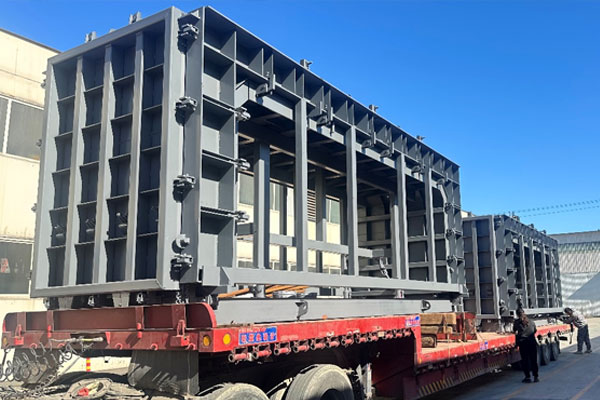
Precast box culverts are widely used in drainage systems, underground utilities, transportation infrastructure, water conservancy projects, and other applications where large rectangular concrete sections need to be manufactured repeatedly. Behind consistent box culvert production is a tooling system that must control both the external dimensions and the internal opening of the finished component.
A box culvert mold is therefore much more than a temporary structure for holding fresh concrete. It must maintain dimensional stability during filling and vibration, position the internal core correctly, accommodate reinforcement, support efficient opening and closing, and allow the finished culvert to be removed without unnecessary damage.
For precast manufacturers, mold design directly influences production efficiency and repeatability. The relationship between the external mold, internal core, reinforcement cage, concrete placement process, vibration system, hydraulic mechanisms, and material handling should all be considered together. Huier’s concrete box culvert system is designed around this type of precast production requirement.
What Is a Box Culvert Mold?
A box culvert mold is a reusable forming system designed to manufacture rectangular or square reinforced concrete culvert sections.
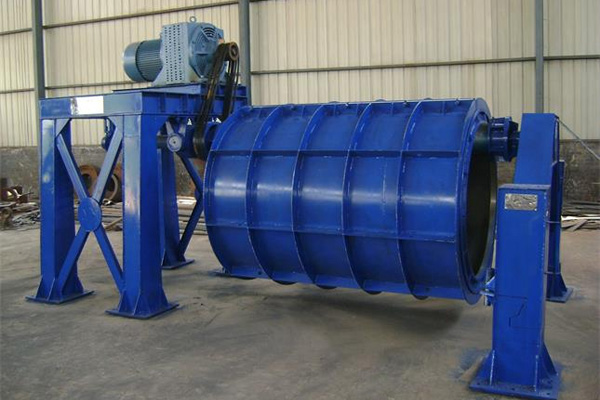
Unlike a concrete pipe mold, which mainly works around circular geometry, a box culvert mold normally needs to control several large flat surfaces simultaneously. These surfaces create the roof, base, side walls, and internal opening of the finished culvert.
A typical system may include:
- external side panels
- internal core
- base structure
- end-forming sections
- reinforcement positioning space
- locking mechanisms
- opening and closing mechanisms
- hydraulic or mechanical operating systems
- lifting and handling points
The external mold determines the overall outside dimensions, while the internal core establishes the internal opening. The distance between these two structures determines the wall thickness.
Because both systems must remain correctly positioned throughout casting, box culvert mold accuracy depends heavily on rigidity and alignment.
Why Box Culvert Geometry Requires Precise Mold Control
Box culverts often need to connect section by section along a drainage or underground infrastructure route.
This means each section should maintain predictable dimensions. If wall thickness, opening size, joint geometry, or section alignment varies significantly between production cycles, installation can become more difficult.
A box culvert generally contains several geometric areas that need close control:
| Area | Main Production Requirement |
|---|---|
| Internal opening | Consistent width and height |
| Side walls | Stable wall thickness |
| Roof and base | Controlled thickness and flatness |
| Corners | Accurate geometry and good compaction |
| Joint ends | Repeatable connection profile |
| External dimensions | Consistent project installation size |
Unlike small precast products, dimensional variation in large box sections can accumulate over several meters.
For this reason, mold engineering should focus on the entire structural geometry rather than checking individual panels independently.
External Mold Structure
The external mold surrounds the concrete component and defines its outer dimensions.
Because box culverts contain relatively large flat surfaces, the external panels need sufficient structural support to resist deformation during concrete placement and vibration.
Large flat steel plates without adequate reinforcement can flex under pressure. Mold frames therefore commonly incorporate stiffening ribs, beams, supports, and locking structures.
The design objective is not simply to make the mold as heavy as possible. Additional steel increases weight and can make opening, closing, transportation, and maintenance more difficult.
Instead, reinforcing members should be positioned where they can distribute casting loads effectively.
Good external mold design balances:
- structural rigidity
- manageable mold weight
- repeatable alignment
- practical opening
- easy cleaning
- maintenance access
- safe handling
This balance becomes increasingly important as culvert dimensions increase.
Internal Core Design
The internal core forms the hollow passage inside the box culvert.
Its position directly affects the thickness of all surrounding walls. If the core moves toward one side during production, one wall becomes thinner while the opposite wall becomes thicker.
The same principle applies vertically. Incorrect core height can change the thickness relationship between the roof and base.
The internal core therefore requires reliable positioning references.
For large culvert molds, the core may also need a mechanism that reduces its dimensions slightly during demolding. A completely rigid internal core can become difficult to remove once the surrounding concrete component has hardened sufficiently.
Retractable, collapsible, or hydraulically operated core designs can help create clearance between the mold and finished concrete before extraction.
Why Mold Rigidity Matters
Fresh concrete creates substantial pressure against mold surfaces, especially in large precast components.
Vibration introduces additional dynamic forces.
If the mold changes shape during these processes, the concrete will reproduce that movement in the finished component.
Potential consequences include:
- uneven wall thickness
- distorted openings
- misaligned corners
- dimensional variation
- joint inconsistency
- difficult assembly between sections
Structural stability should therefore be evaluated under actual production conditions rather than only when the mold is empty.
Welded frames, reinforcement ribs, support structures, locking devices, and hydraulic components all contribute to maintaining the required geometry.
The Importance of Wall Thickness Control
Box culvert wall thickness is determined by the space between the internal core and external mold.
Maintaining this spacing is one of the most important functions of the mold system.
Several factors can influence it:
- internal core movement
- external panel deformation
- inaccurate mold setup
- reinforcement displacement
- uneven locking
- concrete pressure
- incorrect support positioning
Before casting begins, operators should verify that the core is correctly centered relative to the outer mold.
For repeat production, reference points can help operators reproduce the same positioning during every cycle.
Dimensional control should also include corner areas, where geometry can be more difficult to measure but remains important for finished structural consistency.
Reinforcement Placement Inside a Box Culvert Mold

Most infrastructure box culverts contain steel reinforcement.
The reinforcement cage must fit between the internal core and external mold while maintaining appropriate spacing from the concrete surfaces.
This creates an important interaction between mold geometry and reinforcement design.
The production sequence typically needs to allow sufficient access for reinforcement installation before the mold is completely closed.
Operators should confirm that reinforcement:
- fits without interfering with mold movement
- remains correctly positioned
- does not contact unwanted mold surfaces
- maintains required spacing
- does not obstruct closing mechanisms
- leaves room for concrete placement
Embedded components, lifting anchors, connection features, and project-specific inserts should also be planned before casting begins.
A mold designed without considering reinforcement installation can become unnecessarily difficult to operate even if its final dimensions are correct.
Concrete Placement Inside the Mold
Once the mold and reinforcement are prepared, concrete must be placed throughout the section.
Box culverts present several casting challenges because they contain large horizontal and vertical sections together with reinforcement and corners.
Concrete should reach all areas without creating major voids or segregation.
The casting sequence should therefore be planned rather than allowing material to accumulate randomly in one area.
Uneven filling can also create temporary differences in pressure across mold walls.
For large components, a controlled placement sequence helps distribute these loads more predictably.
Concrete consistency, placement rate, reinforcement density, vibration method, and mold structure all influence how effectively the cavity is filled.
Why Vibration Is Important
Vibration helps consolidate concrete around reinforcement and into corners where trapped air might otherwise remain.
Corners can be particularly challenging in box culvert production because reinforcement intersections and geometric changes may restrict concrete movement.
Insufficient compaction can lead to:
- visible voids
- honeycombing
- incomplete corners
- irregular surfaces
- inconsistent density
However, more vibration is not automatically better.
Excessive vibration can contribute to material segregation or place unnecessary repeated loads on the mold structure.
Vibration settings should therefore match the concrete mixture, component dimensions, reinforcement arrangement, and casting procedure.
Because vibration is repeated during every production cycle, mold fasteners, hinges, guides, and locking mechanisms should also be inspected for loosening.
Corner Accuracy in Box Culvert Production
Corners are among the most important geometric areas in a box culvert mold.
They influence structural dimensions, internal clearance, concrete flow, surface appearance, and demolding.
Sharp internal geometry may also make compaction more challenging.
The mold should create consistent corners while still allowing the finished component to release successfully.
Corner deformation can result from:
- insufficient mold rigidity
- damaged panels
- poor alignment
- concrete residue at closing surfaces
- internal core movement
- repeated wear
Regular inspection of corner-forming surfaces is therefore important for plants producing the same culvert dimensions continuously.
Joint Design Between Culvert Sections
Individual box culvert sections are commonly installed sequentially to create a continuous underground passage.
The way sections meet is therefore an important part of production.
Depending on project requirements, the mold may include end-forming systems that create specific connection profiles.
These profiles should remain consistent across multiple production cycles.
Wear or movement at the mold ends can affect the fit between sections even when the main body dimensions remain acceptable.
Joint-forming parts should therefore be treated as precision components.
They should be checked for:
- deformation
- wear
- concrete buildup
- alignment
- loose fasteners
- surface damage
Controlling these areas improves repeatability during both manufacturing and field installation.
Hydraulic Demolding Systems
Demolding is one of the most important differences between simple formwork and an industrial box culvert mold.
A large rectangular concrete component cannot easily be lifted directly away from a completely rigid mold.
The mold must create clearance.
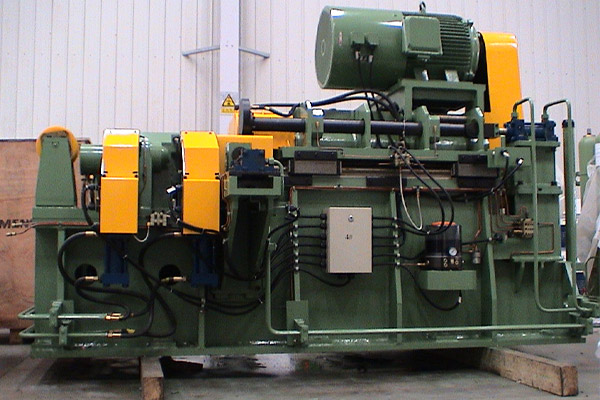
Hydraulic systems can assist by moving external panels away from the concrete and retracting or collapsing sections of the internal core.
A typical sequence may involve:
- releasing locking mechanisms
- retracting the internal core
- opening external side panels
- creating clearance around the component
- lifting or transferring the finished culvert
- resetting the mold for the next cycle
The exact sequence depends on mold design.
The objective is to minimize unnecessary force on both the concrete and the steel mold.
Why Demolding Design Affects Production Efficiency
Demolding happens during every manufacturing cycle.
Even a small reduction in opening and resetting time can become significant across repeated production.
An inefficient mold may require operators to manually remove many fasteners, reposition heavy sections, or apply excessive force to separate the concrete.
A well-designed box culvert mold should make the sequence predictable.
This can support:
- shorter preparation cycles
- reduced manual handling
- lower risk of edge damage
- easier mold cleaning
- faster resetting
- more stable repeated operation
Production efficiency therefore depends not only on how quickly concrete can be placed but also on how efficiently the mold can be prepared for the next component.
Single-Cell and Multi-Cell Box Culvert Molds
Not every project uses the same culvert configuration.
Single-cell culverts contain one internal passage and are among the most straightforward arrangements.
Multi-cell culverts contain two or more passages within the same component or structural system.
This increases mold complexity.
Additional internal walls require more forming surfaces, reinforcement coordination, and dimensional control.
The internal mold system may therefore need multiple cores or a more complex integrated structure.
Special-shaped culverts can create even greater engineering challenges because the mold cannot rely on a simple symmetrical layout.
For these applications, customization becomes particularly important.
Box Culvert Mold Size and Customization
Infrastructure projects can require very different internal clearances, wall thicknesses, section lengths, and load conditions.
For this reason, box culvert molds are often designed around project-specific dimensions rather than a single universal size.
Customization may involve:
- internal width
- internal height
- section length
- wall thickness
- joint geometry
- reinforcement arrangement
- single or multiple cells
- hydraulic opening method
- lifting configuration
- production layout
The current Huier precast production applications include box culvert and utility tunnel mold design as part of broader concrete precast production solutions.
Before mold engineering begins, manufacturers should therefore establish a clear specification for the finished component.
Box Culvert Molds in Precast Infrastructure
Box culverts belong to the broader family of culvert structures used to allow water, drainage systems, utilities, or other crossings to pass beneath roads, railways, embankments, and related infrastructure.
Precasting these sections in a factory changes how construction is organized.
Instead of forming the entire structure at the installation site, individual reinforced concrete sections can be manufactured under controlled conditions and transported for assembly.
This increases the importance of repeatable mold geometry because separately manufactured sections need to correspond with one another during installation.
For mold manufacturers, understanding the final infrastructure application helps determine which dimensions and joint features require the greatest production control.
Common Box Culvert Mold Problems
Uneven Wall Thickness
If the internal core is not centered correctly, wall dimensions may vary between opposite sides.
The cause should be investigated before changing the concrete process.
Concrete Leakage
Leakage from seams can indicate incomplete closure, damaged sealing areas, deformation, or concrete buildup preventing proper contact.
Difficult Demolding
This may result from insufficient clearance, damaged surfaces, incorrect opening sequence, unsuitable mold preparation, or premature demolding.
Corner Damage
Finished corners can be damaged by poor compaction, rough mold surfaces, excessive demolding force, or insufficient concrete strength at removal.
Mold Panel Deformation
Long-term repeated loading or accidental impact can gradually affect large panels.
Regular dimensional inspection helps identify changes before they become repeated product defects.
Box Culvert Mold Maintenance
Routine maintenance should focus on components that determine both geometry and movement.
Important inspection areas include:
| Component | Inspection Focus |
|---|---|
| External panels | Flatness and deformation |
| Internal core | Position and retracting mechanism |
| Hydraulic system | Leaks and movement |
| Locking devices | Secure closure |
| Hinges and guides | Wear and alignment |
| Joint-forming sections | Dimensional condition |
| Welds | Cracks or damage |
| Mold surfaces | Concrete buildup and corrosion |
| Lifting points | Structural condition |
| Fasteners | Tightness |
Cleaning should be incorporated into regular operation.
Concrete residue on locating surfaces or panel joints can gradually change mold alignment, so these areas deserve particular attention.
Planning the Complete Box Culvert Production Workflow
A box culvert mold performs best when it is incorporated into a logical production process.
A typical workflow may include:
Reinforcement preparation → Mold cleaning → Mold setup → Reinforcement installation → Mold closing → Concrete placement → Vibration → Initial curing → Mold opening → Demolding → Component transfer → Mold resetting
Material handling should be planned around this sequence.
Large molds and finished culvert sections can be heavy, meaning overhead lifting or other handling equipment may be required.
The workshop should provide enough space around the mold for opening panels, removing the component, cleaning surfaces, and preparing reinforcement.
Poor layout can reduce the efficiency of an otherwise well-designed mold.
How to Evaluate a Box Culvert Mold Before Production

Before beginning continuous production, manufacturers should complete both dimensional and operational checks.
Important questions include:
- Does the internal opening match the required dimensions?
- Is the internal core correctly centered?
- Are external panels aligned?
- Does the mold close completely?
- Can reinforcement be installed efficiently?
- Are hydraulic movements smooth?
- Is the demolding sequence practical?
- Are lifting and handling points suitable?
- Can operators access surfaces for cleaning?
- Can critical dimensions be measured easily?
A trial casting is particularly valuable.
The first component can be checked for wall thickness, internal dimensions, external dimensions, corners, joint geometry, surface condition, and demolding behavior.
Any necessary adjustments can then be made before larger production batches begin.
Conclusion
A box culvert mold is a specialized precast production system that must control both large external surfaces and a precisely positioned internal opening.
Its performance depends on mold rigidity, internal core alignment, wall thickness control, reinforcement installation, concrete placement, vibration, hydraulic opening, demolding, and maintenance.
Because box culvert sections are frequently manufactured repeatedly for infrastructure projects, consistency between production cycles is particularly important.
The most effective mold design therefore begins with the finished culvert specification and works backward through the complete manufacturing process. Internal dimensions, wall thickness, joint design, reinforcement, casting method, production frequency, handling equipment, and factory layout should all be considered together.
When these elements are coordinated, a box culvert mold can support repeatable precast manufacturing while improving operational efficiency and reducing avoidable dimensional variation.
FAQ
What is a box culvert mold used for?
A box culvert mold is used to manufacture reinforced precast concrete culvert sections with rectangular or square openings. The external mold controls the outside dimensions, while the internal core forms the hollow passage and helps determine wall thickness.
What are the main parts of a box culvert mold?
A typical system includes external panels, an internal core, base structure, end-forming sections, locking devices, alignment components, and mechanical or hydraulic opening mechanisms. The exact configuration depends on culvert dimensions and production requirements.
Why is the internal core important?
The internal core establishes the opening inside the culvert. Its position relative to the external mold determines the thickness of the side walls, roof, and base, so accurate positioning is essential for consistent production.
How does a hydraulic box culvert mold improve demolding?
Hydraulic mechanisms can move external panels and retract sections of the internal core to create clearance between the mold and finished concrete. This can make the opening and resetting sequence more controlled and reduce unnecessary demolding force.
Can box culvert molds be customized?
Yes. Box culvert molds can be engineered for different internal widths, heights, section lengths, wall thicknesses, joint profiles, single-cell or multi-cell arrangements, reinforcement requirements, and production methods.