Table of Contents
Concrete house molds: Control wall thickness and insert location from the same datum so structural and service interfaces remain coordinated. For wall panel thickness and insert position, the review should connect wall thickness, insert position, and common datum. The purpose is to establish what must be checked before the next production or purchasing decision, using the coordinated housing component drawing as the controlling reference.
When assessing concrete house molds, use the coordinated housing component drawing for the project-specific limits and inspection method. The following checks connect wall thickness with insert position and common datum.

1. Wall thickness: the first check
In a concrete house molds project, for wall panel thickness and insert position, compare wall thickness with insert position and common datum under the same identified configuration. Control wall thickness and insert location from the same datum so structural and service interfaces remain coordinated.
For buyers reviewing concrete house molds, wall thickness is tied to the relationship between forming surfaces. Check how the inner and outer parts locate and whether adjustments affect openings or connections. Different thickness options may need compatible inserts. A nominally adjustable mould should be reviewed as a system of interfaces rather than a collection of independently movable panels.
For concrete house molds, the floor-to-wall junction can affect assembly, finishing, and dimensional inspection. Define the relevant plane, angle, and corner geometry in the component drawing. Measure against those references after release. A large module should not be accepted solely because one outside length and one outside width appear correct.
2. Insert position: the connected interface
When assessing concrete house molds, measure long wall interfaces at defined stations rather than accepting one central reading. Local movement or surface irregularity can affect an adjoining panel even when the overall length is acceptable. Relate those stations to the assembly drawing and preserve their identity through the trial and later production inspection.
In projects involving concrete house molds, a room-sized inner form requires a clear release sequence. Identify which parts move first, where clearance is gained, and how the form is supported. Service penetrations and corner details can restrict movement. Verify the sequence with the equipment designer and a representative trial rather than relying on force to overcome interference.
3. Common datum: the acceptance condition
For buyers reviewing concrete house molds, after repair around an insert seat, verify its location relative to the original module datum. A visually tidy repair can still shift an opening. Record the restored reference, the insert identity, and the first accepted casting result. This allows the repaired tool to return to production with a documented basis.
For concrete house molds, architectural surfaces and concealed interfaces need different inspection priorities. Identify finish zones on the drawing and agree on observation conditions. An acceptable concealed face may be unsuitable for an exposed wall. Avoid promising a universal finish from a general mould photograph or from a trial made under different concrete conditions.
4. Concrete house molds review options
When assessing concrete house molds, the decision table connects wall panel thickness and insert position with the evidence needed for wall thickness, insert position, and common datum.
| Decision point | Evidence to request | What it resolves |
|---|---|---|
| Wall thickness | Defined reference and initial observations | Control wall thickness and insert location from the same datum so structural and service interfaces remain coordinated. |
| Insert position | Installed configuration and connected interfaces | Whether the result changes with setup or handling |
| Common datum | Representative trial and released-product inspection | Whether the agreed acceptance question has been answered |
| Return to routine production | Verified configuration, open actions, and recheck triggers | How the accepted result will be reproduced |
5. Production interfaces for concrete house molds
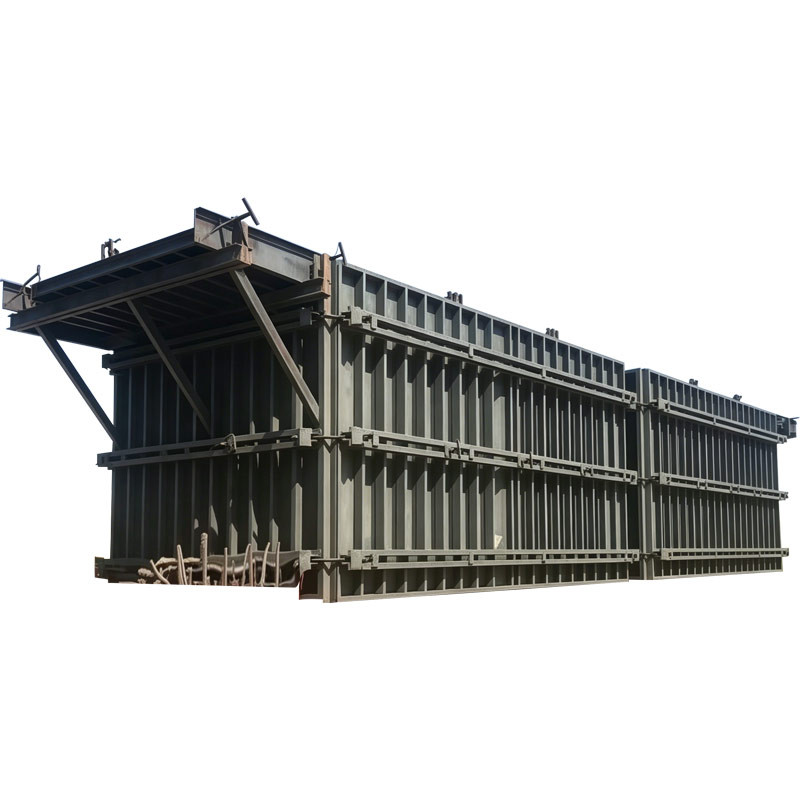
In projects involving concrete house molds, housing tooling begins with a coordinated building component design. Separate the requirements for a wall panel, floor element, and volumetric room module. These products have different interfaces and handling constraints. The mould supplier needs approved drawings and production assumptions rather than an architectural rendering alone.
For buyers reviewing concrete house molds, changes to an embedded connection require coordination with the responsible project designer. The mould manufacturer can review locating and forming interfaces, but should not be assumed to redefine structural function. Keep the approved connection detail and the tooling implementation on linked revisions so production personnel have a consistent instruction.
6. A representative verification trial
In a concrete house molds project, for wall panel thickness and insert position, record the incoming or assembled condition, the verified setup or intervention, and the final observation. Identify wall thickness, insert position, and common datum on the trial sheet. Keep failures and interruptions in the record. If an input, support, or measurement method changes, label the change so the next comparison remains interpretable.
When assessing concrete house molds, finish acceptance should distinguish blemishes from geometry and assembly requirements. Agree on the relevant sample or observation method and record the production condition. A surface treatment that improves appearance may change cleaning or release behaviour. Review those effects during the trial instead of introducing the change across all configurations immediately.
Panels and volumetric modules offer different production and logistics routes. Panel systems require connection and assembly planning. Volumetric systems can move more work into the factory but may create larger transport envelopes and more demanding release paths. Compare the alternatives using the actual building design and destination constraints.
7. Maintenance and repeatability of concrete house molds
Transport planning should distinguish the mould shipment from finished-module transport. Record packed tooling dimensions, component masses, lifting provisions, and destination access. A form that can be assembled in the supplier’s workshop may require a different assembly sequence in the customer’s production bay. Resolve that interface before dispatch.
Configurable opening inserts should carry a clear identity and revision. Keep compatible fasteners, locators, and setup information with each insert kit. Verify the resulting opening after the first trial casting. This prevents one incorrect part from repeating a dimensional error across a batch of otherwise consistent modules.
8. Evidence to include in the technical inquiry
The inquiry for wall panel thickness and insert position should include the coordinated housing component drawing, the planned material or product range, and observations of wall thickness, insert position, and common datum. Ask the supplier to identify its proposed configuration, excluded conditions, trial method, and supply boundary. A quotation is easier to compare when it answers these project-specific interfaces.
Explore Huier’s related product information and submit drawings through the technical inquiry page. Keep any proposed change to the requirement separate from a change to the equipment or tooling. Record which party must approve each change before it enters production.
9. Decision checklist for concrete house molds
Before releasing this project stage, confirm the approved revision, the evidence for wall thickness, the connected check for insert position, and the acceptance observation for common datum. Identify any product or condition that the trial did not cover. Keep the accepted configuration and the triggers for reinspection together with the order record.
Additional reading: precast concrete background. This reference is provided as technical background, without implying a product certification or an independent assessment of the proposed equipment.
For a concrete house molds project involving wall panel thickness and insert position, send Shandong Huier Heavy Industry the approved drawing, representative input details, and observations for wall thickness, insert position, and common datum. Request a configuration review and a clearly defined quotation, trial, and inspection scope.
Frequently asked questions
What is the first priority in wall panel thickness and insert position?
Control wall thickness and insert location from the same datum so structural and service interfaces remain coordinated. Use the coordinated housing component drawing to define the acceptance question before changing the setup or ordering parts.
How should wall thickness be recorded for concrete house molds?
Record the identified configuration and inspection reference. Compare wall thickness with the agreed requirement and retain the connected observation for insert position.
Why does insert position matter when reviewing concrete house molds?
It is one of the interfaces identified for wall panel thickness and insert position. Check insert position against the project requirement, alongside the evidence for wall thickness and common datum, before assigning a cause.
What trial evidence is needed for concrete house molds?
Represent the actual input and configuration for wall panel thickness and insert position. Retain results for wall thickness, insert position, and common datum, including failed checks.
What should a supplier proposal for concrete house molds contain?
It should address wall panel thickness and insert position, the defined supply boundary, and the method for verifying wall thickness. Include the coordinated housing component drawing in the inquiry.