Table of Contents
Automated pipe cutting machine: Check feed positioning against a stable reference and include clamp movement in the investigation. For automatic feeding length repeatability, the review should connect feed position, stable reference, and clamp movement. The purpose is to establish what must be checked before the next production or purchasing decision, using the finished-part drawing and representative stock conditions as the controlling reference.
When assessing an automated pipe cutting machine, use the finished-part drawing and representative stock conditions for the project-specific limits and inspection method. The following checks connect feed position with stable reference and clamp movement.

1. Feed position: the first check
In a automated pipe cutting machine project, for automatic feeding length repeatability, compare feed position with stable reference and clamp movement under the same identified configuration. Check feed positioning against a stable reference and include clamp movement in the investigation.
For buyers reviewing an automated pipe cutting machine, feed positioning needs a stable reference. Check stops, encoders or other positioning elements according to the machine design, then include clamp movement in the investigation. A correct feed command does not prove a correct cut length. Compare actual measurements over a controlled sequence of parts.
For an automated pipe cutting machine, long stock needs support before the cutting zone, and the offcut needs controlled support after separation. Uncontrolled movement can disturb the final part of a cut or damage the end. Include loading and discharge in the layout review. The cutting head is only one part of the material-handling system.
2. Stable reference: the connected interface
When assessing an automated pipe cutting machine, length drift should be investigated using a consistent sequence of measured parts. Record feed references, clamp engagement, and any interruptions. A single outlier may relate to seating or measurement, while a progressive change may require a different review. Keep actual values rather than only a pass count so the pattern remains visible.
In projects involving an automated pipe cutting machine, automatic operation includes loading, discharge, inspection, and recovery after interruption. Review which tasks remain manual and how an operator restarts a partially completed cycle. Count accepted parts across a normal shift condition. A brief cutting demonstration can omit the delays that dominate practical output.
3. Clamp movement: the acceptance condition
For buyers reviewing an automated pipe cutting machine, a pipe sawing process starts with material grade, diameter, wall thickness, length, and the required finished end. These inputs affect workholding, blade selection, feeding, and downstream operations. Match the proposed machine to the actual section envelope. Do not assume that a nominal diameter capability applies to every wall thickness and material combination.
For an automated pipe cutting machine, review how the operator identifies and restarts an interrupted automatic cycle. Retain the product condition and required recovery checks in the commissioning record. Recovery time and rejected parts affect accepted output. A purchasing comparison based only on uninterrupted cutting speed can miss an important difference between proposed production arrangements.
4. Automated pipe cutting machine review options
When assessing an automated pipe cutting machine, the decision table connects automatic feeding length repeatability with the evidence needed for feed position, stable reference, and clamp movement.
| Decision point | Evidence to request | What it resolves |
|---|---|---|
| Feed position | Defined reference and initial observations | Check feed positioning against a stable reference and include clamp movement in the investigation. |
| Stable reference | Installed configuration and connected interfaces | Whether the result changes with setup or handling |
| Clamp movement | Representative trial and released-product inspection | Whether the agreed acceptance question has been answered |
| Return to routine production | Verified configuration, open actions, and recheck triggers | How the accepted result will be reproduced |
5. Production interfaces for automated pipe cutting machine
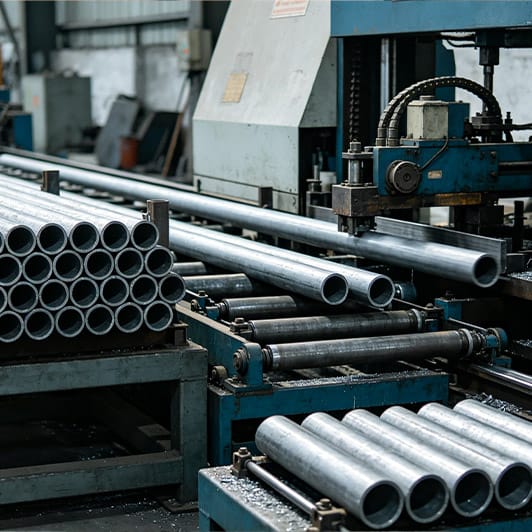
In projects involving an automated pipe cutting machine, the clamp must hold the pipe consistently without creating unacceptable distortion. Review support positions and contact areas with the supplier. Observe movement during representative cuts and measure the released part. Increasing force can reduce slip while worsening ovality, so workholding should be evaluated as a balanced arrangement.
For buyers reviewing an automated pipe cutting machine, distinguish a final-length requirement from a blank-length requirement before a cutting trial. If subsequent facing removes material, record the allowance and its reference. Compare the final result after the complete route. This prevents a dispute in which the saw accurately produces the specified blank but the overall process delivers an incorrect finished part.
6. A representative verification trial
In a automated pipe cutting machine project, for automatic feeding length repeatability, record the incoming or assembled condition, the verified setup or intervention, and the final observation. Identify feed position, stable reference, and clamp movement on the trial sheet. Keep failures and interruptions in the record. If an input, support, or measurement method changes, label the change so the next comparison remains interpretable.
When assessing an automated pipe cutting machine, a factory trial should cover representative material and challenging section conditions within the agreed envelope. Define cut geometry, finish, length, and accepted output criteria in advance. Record interruptions and consumable condition. A result from the easiest sample should not be presented as evidence for every planned product.
Offcut movement can affect the end of a cut even when incoming stock is well supported. Review how separation changes the load and where the part is received. Observe the complete cutting sequence in the trial. The material-handling plan should prevent the final stage from becoming an uncontrolled movement or an avoidable source of edge damage.
7. Maintenance and repeatability of automated pipe cutting machine
Changeovers should identify material, section, recipe, blade, and physical setup. Verify the first accepted cut and record the measurement method. A saved recipe may not capture a different clamp insert or support position. Keep the mechanical setup and control information linked to the same product identity.
Cut length may include material removed by facing or other end preparation. Define whether the saw produces a finished length or an intermediate blank. Allocate allowances from the approved fabrication drawing and verify the complete process. A precise saw setting can still yield the wrong final length when the downstream allowance is omitted.
8. Evidence to include in the technical inquiry
The inquiry for automatic feeding length repeatability should include the finished-part drawing and representative stock conditions, the planned material or product range, and observations of feed position, stable reference, and clamp movement. Ask the supplier to identify its proposed configuration, excluded conditions, trial method, and supply boundary. A quotation is easier to compare when it answers these project-specific interfaces.
Explore Huier’s related product information and submit drawings through the technical inquiry page. Keep any proposed change to the requirement separate from a change to the equipment or tooling. Record which party must approve each change before it enters production.
9. Decision checklist for automated pipe cutting machine
Before releasing this project stage, confirm the approved revision, the evidence for feed position, the connected check for stable reference, and the acceptance observation for clamp movement. Identify any product or condition that the trial did not cover. Keep the accepted configuration and the triggers for reinspection together with the order record.
Additional reading: NIST length-unit reference. This reference is provided as technical background, without implying a product certification or an independent assessment of the proposed equipment.
For a automated pipe cutting machine project involving automatic feeding length repeatability, send Shandong Huier Heavy Industry the approved drawing, representative input details, and observations for feed position, stable reference, and clamp movement. Request a configuration review and a clearly defined quotation, trial, and inspection scope.
Frequently asked questions
What is the first priority in automatic feeding length repeatability?
Check feed positioning against a stable reference and include clamp movement in the investigation. Use the finished-part drawing and representative stock conditions to define the acceptance question before changing the setup or ordering parts.
How should feed position be recorded for automated pipe cutting machine?
Record the identified configuration and inspection reference. Compare feed position with the agreed requirement and retain the connected observation for stable reference.
Why does stable reference matter when reviewing an automated pipe cutting machine?
It is one of the interfaces identified for automatic feeding length repeatability. Check stable reference against the project requirement, alongside the evidence for feed position and clamp movement, before assigning a cause.
What trial evidence is needed for automated pipe cutting machine?
Represent the actual input and configuration for automatic feeding length repeatability. Retain results for feed position, stable reference, and clamp movement, including failed checks.
What should a supplier proposal for automated pipe cutting machine contain?
It should address automatic feeding length repeatability, the defined supply boundary, and the method for verifying feed position. Include the finished-part drawing and representative stock conditions in the inquiry.