Table of Contents
Introduction
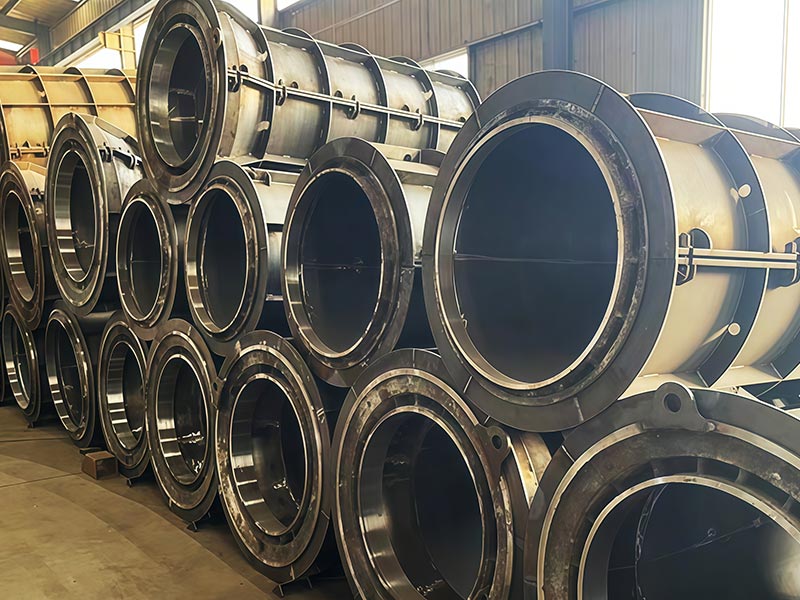
Steel is usually the best material for a concrete mold form used in large-scale, repetitive, and dimensionally controlled precast production. It offers high rigidity, stable dimensions, strong resistance to concrete pressure, and the ability to incorporate hinges, locks, retractable sections, removable panels, and mechanical demolding systems.
That does not mean steel is automatically the right choice for every concrete product.
Fiberglass can be more practical for curved architectural components. Plastic can work well for smaller standardized products. Silicone and polyurethane are better at reproducing detailed textures and releasing shapes with undercuts. Plywood remains useful for prototypes and limited production, while aluminum can reduce the handling weight of frequently moved molds.
The correct material is therefore determined by how the mold will be used, not by a general ranking of material strength. A reliable concrete mold form must control shape, support fresh concrete, maintain dimensional accuracy, create the required surface, and release the hardened component without damage.
What “Best” Means for a Concrete Mold Form
The word “best” should describe production performance rather than one isolated material property.
A concrete mold form is successful when it delivers repeatable components with acceptable dimensions and surface quality while remaining practical to assemble, clean, maintain, and demold.
Five performance areas should be considered together.
Structural Stability
Fresh concrete creates pressure against the mold surface. The actual load depends on the height of the pour, mixture consistency, placement speed, vibration method, and shape of the product.
If the mold walls move during casting, the finished component may have inconsistent thickness, curved surfaces, displaced openings, or misaligned edges. A material must therefore be evaluated as part of a complete structure that includes panels, stiffeners, frames, joints, locks, and supporting foundations.
Casting Repeatability
A mold may produce an acceptable first component but gradually lose accuracy after repeated opening, lifting, cleaning, and reassembly.
Repeatability depends on more than material hardness. Joint wear, hinge clearance, fastener movement, surface abrasion, and improper storage can change the geometry of the mold over time.
For high-cycle production, the best concrete mold form is one that returns to the same position after every casting cycle.
Surface Quality
Concrete reproduces the condition of the surface against which it is cast. Scratches, joints, dents, fibers, weld marks, accumulated residue, and uneven coatings may all appear on the finished product.
The casting surface must therefore be evaluated separately from the structural frame. A mold can remain structurally strong while producing unacceptable concrete surfaces because its facing material has deteriorated.
Demolding Performance
The material and mold structure must allow the component to be released without cracking corners, damaging textures, or placing excessive stress on the mold.
Straight-sided products with adequate draft can often use rigid molds. Deep recesses, internal cavities, reverse angles, and undercuts may require removable cores, retractable sections, flexible liners, or multi-part opening systems.
Maintenance and Service Life
The best material is not simply the one that lasts longest without visible failure. It is the one that can be inspected, repaired, adjusted, and returned to production efficiently.
A fabricated steel mold may have a higher maintenance value because worn plates, seals, hinges, and inserts can be replaced. A lightweight plastic mold may require less daily maintenance but may be harder to restore after permanent deformation.
Factors That Should Be Defined Before Selecting a Material
Material selection should begin with a written description of the product and production process.
Concrete Product Dimensions
Large components generate greater loads and usually require rigid frames. Wall panels, modular concrete structures, pipes, culverts, beams, and deep box-shaped products commonly favor steel or reinforced hybrid construction.
Small pavers, decorative pieces, stepping stones, and garden components may not require the same structural capacity.
Expected Production Cycles
A mold for several development castings has different requirements from a mold expected to operate repeatedly over a long production program.
As the number of cycles increases, resistance to abrasion, joint wear, surface damage, fastener fatigue, and dimensional drift becomes more important.
Required Dimensional Tolerance
Some products only need to maintain their overall appearance. Others must connect to adjacent components, accept doors or windows, align with reinforcement, or match accurately positioned openings.
Tighter tolerances generally favor rigid materials, machined locating features, controlled locking systems, and repeatable assembly points.
Surface Texture and Appearance
A smooth industrial component, a wood-textured panel, and a detailed decorative ornament require different mold surfaces.
The selected material must reproduce the intended finish while remaining compatible with cleaning methods and release agents. The general concept of formwork includes systems made from wood, metal, plastic, and composite materials, each offering different combinations of flexibility, reuse, structural support, and surface characteristics.
Concrete Placement and Compaction
A highly workable mixture can flow into detailed geometry, but it may also create sustained pressure against the mold walls. Strong mechanical vibration places additional demands on joints, locks, fasteners, and supporting frames.
The mold must be designed around the actual casting process. A material that is suitable for low-pressure hand casting may not remain stable under industrial vibration.
Product Geometry and Release Direction
Before selecting a rigid or flexible material, identify how the finished product will leave the mold.
Questions to answer include:
- Does the product have sufficient draft?
- Are there internal cavities?
- Are any details wider behind the mold opening?
- Can the mold move away in a straight direction?
- Will removable inserts be required?
- Can the product support its own weight during release?
Many demolding failures are geometry problems rather than material problems.
Cleaning and Handling Conditions
A mold may be manually handled, moved by lifting equipment, rotated, opened hydraulically, or transported between production areas.
Its material should match the handling method. Heavy weight is less important when a mold remains installed and is opened mechanically. It becomes a greater concern when operators must frequently reposition sections by hand.
Steel Concrete Mold Forms
For large precast products and repetitive industrial casting, steel provides the strongest overall combination of rigidity, accuracy, durability, and repairability.
Where Steel Performs Best
Steel is particularly suitable for:
- Prefabricated concrete rooms and wall systems
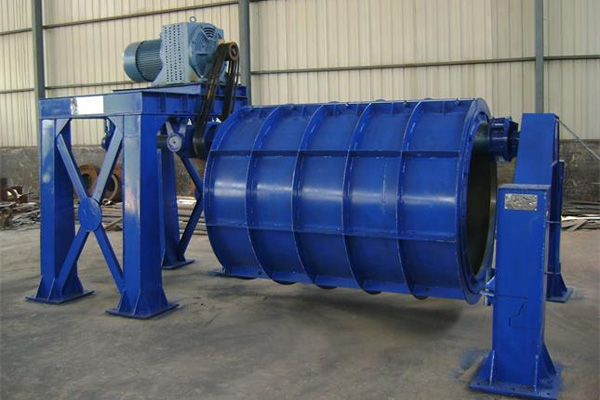
- Concrete pipes and culverts
- Large panels and structural elements
- Products requiring stable wall thickness
- Molds using strong vibration
- Mechanically opened molds
- Products with adjustable dimensions
- Long and repetitive production programs
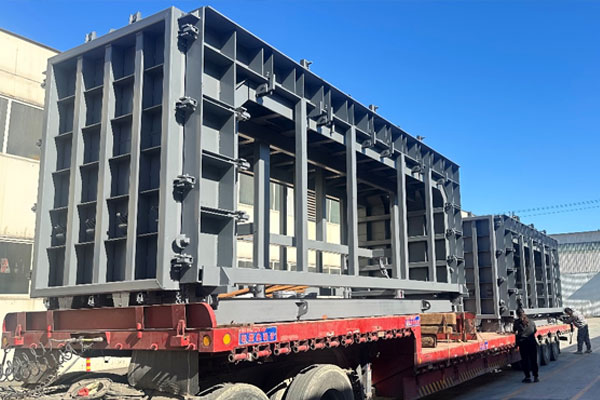
A fabricated steel mold can incorporate external stiffeners, adjustable panels, retractable cores, hydraulic opening devices, lifting points, alignment pins, and replaceable casting plates.
The design of a prefabricated concrete house mould demonstrates how high-strength steel can be combined with adjustable, retractable, and mechanically controlled structures for large precast components.
Main Advantages
The principal advantage of steel is stiffness. Properly designed steel panels and frames resist movement during filling and vibration, helping maintain consistent dimensions across multiple castings.
Steel also offers several practical benefits:
- Critical surfaces can be machined
- Joints can be accurately aligned
- Stiffeners can be positioned according to calculated loads
- Hinges and locks can be integrated into the frame
- Damaged areas can often be welded or replaced
- Worn inserts can be removed without rebuilding the mold
- Opening systems can be customized around the product geometry
Steel is especially effective when the mold functions as production equipment rather than as a simple container.
Design Considerations and Limitations
A steel mold only performs well when it is engineered and fabricated correctly.
Poor welding sequences may distort large panels. Inadequate stiffening may allow deflection. Misaligned hinges can prevent consistent closure, while unsuitable surface preparation may leave visible defects on the concrete.
Steel surfaces also require protection from moisture and unsuitable cleaning practices. Release agents, coatings, storage conditions, and routine inspection must be managed consistently.
The best steel mold is not necessarily the one with the thickest plates. Efficient designs place material where stiffness is needed and avoid unnecessary weight where it provides little structural benefit.
Fiberglass Concrete Mold Forms
Fiberglass-reinforced composite molds are useful when the product has curved, sculpted, or non-linear surfaces that would be difficult to fabricate from flat steel plate.
A fiberglass concrete mold form usually includes a smooth resin-rich casting face supported by layers of reinforcing fiber. Larger molds may also use a separate steel or timber frame.
Suitable Product Geometries
Fiberglass performs well for:
- Curved architectural panels
- Planters and landscape components
- Decorative wall sections
- Rounded shells
- Shallow sculpted surfaces
- Repeated products formed from a master pattern
The mold can reproduce complex curves without requiring numerous welded steel sections.
Benefits of Composite Construction
Fiberglass is generally lighter than a comparable steel mold and can provide a smooth casting surface. It also allows a master model to be reproduced with relatively consistent geometry.
For medium-sized products, it offers a useful balance between rigidity and shape flexibility.
Surface and Maintenance Requirements
Fiberglass casting faces are vulnerable to scratches, impact damage, and aggressive cleaning. A small defect in the resin surface can be reproduced on every subsequent concrete product.
The support structure is equally important. Large unsupported fiberglass areas may flex under concrete pressure, even when the empty mold appears rigid.
Repairs should restore both structural strength and the original surface profile. A strong repair that is not properly finished may remain visible in the concrete.
Plastic Concrete Mold Forms
Engineered plastics are often appropriate for smaller, standardized products that require lightweight handling and repeatable geometry.
Depending on the manufacturing process, plastic molds may include molded ribs, locating features, rounded corners, textures, and integrated release angles.
Suitable Applications
Plastic concrete molds are commonly suited to:
- Pavers
- Decorative tiles
- Stepping stones
- Small blocks
- Garden elements
- Standardized landscape products
- Moderate-volume repetitive casting
Their low weight can simplify filling, moving, cleaning, and demolding.
Weight and Handling Advantages
Plastic molds can reduce manual handling effort and may not require lifting equipment for smaller products. Their surfaces are also non-porous when properly manufactured, making routine cleaning relatively straightforward.
Integrated ribs can improve stiffness without making the entire mold excessively heavy.
Deformation and Support Considerations
Plastic is more sensitive than steel to temperature, unsupported spans, long-term loading, and local impact. A thin mold wall may bulge during casting or gradually lose its original shape.
The important question is not simply whether a plastic is described as strong. The wall thickness, rib pattern, corner design, support frame, and operating temperature all affect actual performance.
For larger components, plastic often performs better as a replaceable liner inside a rigid frame than as the complete load-bearing structure.
Silicone and Polyurethane Concrete Molds
Flexible silicone and polyurethane materials are usually the best choice for detailed surfaces, irregular shapes, and undercuts that cannot be released from a rigid mold.
Complex Details and Undercuts
Flexible molds can reproduce:
- Stone and wood textures
- Sculptural details
- Decorative reliefs
- Recessed patterns
- Complex planter profiles
- Natural surface replicas
- Features with limited release angles
The mold can be peeled or flexed away from the concrete, reducing the need to divide the design into multiple rigid sections.
The Role of a Rigid Support Shell
Flexibility helps during demolding but creates a challenge during casting. Concrete weight may cause an unsupported rubber mold to expand, twist, or sag.
A rigid support shell, sometimes called a mother mold, is therefore commonly used. The flexible liner reproduces the texture, while the external shell controls the overall dimensions.
Limitations in Large-Scale Production
Flexible materials may tear around thin edges, bolt holes, sharp corners, or heavily stretched areas. Their surface can also wear as repeated concrete components are removed.
They are most effective when used selectively for the geometry that requires flexibility rather than as the entire structure of a large industrial mold.
Plywood and Timber Concrete Mold Forms
Plywood and timber are practical for prototypes, one-off components, development testing, and limited production of simple shapes.
Prototypes and Limited Production
Timber-based molds can be fabricated and modified with commonly available equipment. Openings can be moved, dimensions can be adjusted, and support members can be added after an initial trial.
This flexibility is useful when a product design has not yet been finalized.
Moisture Protection
Unsealed plywood absorbs moisture from fresh concrete. This can cause swelling, edge damage, grain transfer, and inconsistent surface appearance.
Panel faces, cut edges, drilled holes, and joints should be sealed before production. The sealing system must also be compatible with the release agent.
Surface Consistency and Dimensional Stability
Repeated wetting, drying, fastening, and stripping gradually reduce the dimensional stability of timber molds. Screw holes may loosen, edges may separate, and panel surfaces may become damaged.
Plywood remains useful for short production programs, but it is less suitable for long-term repetition, high concrete pressure, tight tolerances, or complex mechanical opening systems.
Aluminum Concrete Mold Forms
Aluminum provides useful stiffness at a lower weight than many steel structures. It is often considered when molds must be moved frequently or when handling weight significantly affects the production process.
Lightweight Reusable Systems
Aluminum panels can incorporate extruded ribs, accurately machined connections, and repeatable locking features. Their reduced weight can simplify manual assembly and movement.
Structural and Surface Considerations
Lower weight does not eliminate the need for structural analysis. Large aluminum panels can still deflect if their profiles, supports, or joints are inadequate.
The casting surface must also use suitable protective treatments, cleaning procedures, and release agents. Fresh concrete is highly alkaline, so material compatibility should be confirmed as part of the mold specification.
When Aluminum Provides a Practical Advantage
Aluminum is most valuable when reduced weight produces a measurable operational benefit, such as faster panel movement, easier assembly, or lower lifting requirements.
For a permanently installed heavy-duty mold, steel may still provide a more practical balance of stiffness, repairability, and fabrication flexibility.
Concrete Mold Form Material Comparison
| Material | Best applications | Main advantages | Main limitations | Relative dimensional stability |
|---|---|---|---|---|
| Steel | Large precast products, pipes, culverts, wall systems and modular structures | High rigidity, repairable construction, accurate joints and mechanical opening options | Requires corrosion control, lifting arrangements and controlled fabrication | Very high |
| Fiberglass | Curved panels, planters and decorative components | Smooth surfaces, lower weight and complex curved geometry | Susceptible to scratches, impact and unsupported flexing | Medium to high |
| Engineered plastic | Pavers, tiles, small blocks and standardized products | Lightweight, non-porous and easy to handle | Heat sensitivity and possible long-term deformation | Medium |
| Silicone or polyurethane | Textures, ornaments, sculptures and undercuts | Excellent detail reproduction and flexible release | Requires rigid support and may wear or tear | Low without support |
| Plywood or timber | Prototypes, one-off forms and limited production | Easy to fabricate and modify | Moisture sensitivity and decreasing repeatability | Low to medium |
| Aluminum | Reusable systems requiring frequent movement | Lower weight, machinable connections and good rigidity | Requires careful structural and surface design | High |
| Hybrid construction | Large or complex customized products | Combines rigidity, detail, repairability and replaceable parts | Interfaces between materials require careful design | High when engineered correctly |
Why Hybrid Mold Construction Often Performs Better
A concrete mold form does not always need to be manufactured from one material.
In many cases, hybrid construction produces better performance because the structural frame and casting surface have different jobs.
Separating Structural and Casting-Surface Functions
A steel frame may provide rigidity, while a flexible liner creates a detailed surface. A fiberglass shell may reproduce a curved geometry while a steel cradle controls alignment. A plastic liner may provide a clean casting surface inside a reusable metal frame.
This approach allows each material to perform the function for which it is best suited.
Replaceable Liners and Inserts
Certain areas of a mold wear faster than others, including:
- Joint edges
- Core sections
- Locating surfaces
- Openings
- Seal contact points
- Areas exposed to frequent scraping
- Thin decorative details
Replaceable inserts allow these areas to be renewed without rebuilding the complete mold.
Easier Maintenance and Modification
Hybrid construction can also make future product changes more manageable. A new opening, texture, logo, or connection detail may be introduced by replacing an insert rather than modifying the main structural frame.
This creates a more adaptable production asset.
How Concrete Properties Affect Mold Material Selection
The same mold material can perform differently with different concrete mixtures and casting processes.
Highly fluid concrete follows mold surfaces closely and can reproduce fine details, but it may also sustain pressure against vertical mold walls for longer periods. Conventional concrete that requires vibration places dynamic loads on joints and supporting frames.
Aggregate size affects narrow sections and detailed corners. Reinforcement layout can restrict concrete flow and complicate the positioning of removable cores. Accelerated curing may expose the mold to repeated temperature changes.
Material selection should therefore consider:
- Concrete consistency
- Placement rate
- Compaction method
- Aggregate size
- Reinforcement congestion
- Curing temperature
- Planned demolding time
- Frequency of casting cycles
The mold and the concrete mixture should be treated as parts of the same production system.
Common Concrete Mold Form Material Selection Mistakes
Selecting the Strongest Material Without Studying Geometry
A rigid steel mold may be extremely strong but still unsuitable for a product with trapped undercuts. Strength cannot compensate for an impossible release direction.
Comparing Materials Without Comparing Complete Designs
A thin plastic shell should not be compared directly with a reinforced steel mold. Performance depends on the complete structure, including ribs, frames, supports, locks, and joints.
Ignoring Local Wear
The entire mold rarely wears at the same rate. Hinges, corners, seals, insert edges, and frequently cleaned zones may fail first.
Designing these areas as replaceable components can greatly improve practical service life.
Focusing Only on the First Casting
A material that creates a good first product may not remain accurate after repeated use. Selection should account for cleaning, storage, handling, opening, and reassembly over the full production period.
Treating Release Agent as a Solution to Poor Design
Release agent cannot correct insufficient draft, trapped geometry, damaged casting surfaces, or an unsuitable opening sequence.
It supports demolding, but it does not replace proper mold engineering.
Overlooking Cleaning Access
Residue gradually changes mold dimensions and surface texture. Narrow joints, internal corners, and deep cavities should be accessible for inspection and cleaning.
A Practical Material Selection Method
A reliable decision can be made through five steps.
Step 1: Document the Finished Product
Record the dimensions, wall thickness, openings, textures, corner profiles, lifting points, connection features, and acceptable tolerances.
Step 2: Define the Production Cycle
Identify how the mold will be assembled, filled, compacted, cured, opened, cleaned, and returned to service.
Step 3: Separate Structural and Surface Requirements
Determine which material should resist concrete pressure and which material should create the visible surface. This step often reveals whether hybrid construction is appropriate.
Step 4: Evaluate Demolding Before Fabrication
Define the movement of every side panel, internal core, insert, and finished concrete component. Confirm that sufficient clearance exists at each stage.
Step 5: Design for Maintenance
Identify components that are likely to wear and make them accessible or replaceable. Include inspection points, lifting positions, adjustment features, and cleaning access in the design.
Technical drawings, product dimensions, surface requirements, and expected production methods can be submitted through a custom concrete mould consultation to evaluate the mold material, opening structure, and support system together.
Maintaining Different Concrete Mold Form Materials
Steel molds should be kept clean and dry, with coatings, joints, locks, and alignment points inspected regularly. Damaged casting surfaces should be repaired before the defect begins appearing repeatedly on concrete products.
Fiberglass molds require non-damaging cleaning tools and careful protection against impact. Surface cracks should be repaired before moisture reaches the reinforcing layers.
Plastic molds should be stored on stable supports and protected from excessive heat or long-term distortion. Heavy objects should not be placed on empty mold walls.
Flexible molds should be stored in their natural shape or within their support shells. Sharp tools should be avoided during cleaning and demolding.
Plywood molds require effective sealing and dry storage. Damaged edges and open joints should be repaired before the next casting.
Aluminum molds need compatible cleaning products and release systems. Connection points should be checked for wear that could affect alignment.
Consistent maintenance is often more important than small differences between materials. A carefully maintained mid-range system can outperform a technically superior material that is handled poorly.
Conclusion
For large, repeatedly used, and dimensionally controlled precast products, steel is generally the best material for a concrete mold form. It provides strong structural stability, accurate alignment, repairable construction, and the flexibility to incorporate adjustable panels, mechanical locks, retractable cores, and controlled demolding systems.
Fiberglass is often better for curved components. Plastic is practical for smaller standardized products. Silicone and polyurethane suit detailed surfaces and undercuts. Plywood supports prototypes and limited production, while aluminum can provide an advantage when lower handling weight is important.
The most effective solution may combine several materials. A rigid steel structure can support a plastic, composite, or flexible casting surface, while replaceable inserts and seals reduce long-term maintenance.
The final decision should be based on the concrete product, production frequency, required tolerance, surface expectations, placement method, demolding sequence, handling conditions, and maintenance capability. Choosing the mold as a complete production system is more reliable than choosing a material by strength alone.
FAQ
What is the best material for a reusable concrete mold form?
Steel is generally the best option for large reusable molds requiring rigid dimensions, repetitive operation, and mechanical demolding. Fiberglass and plastic may suit lighter products, while flexible rubber is more appropriate for detailed shapes and undercuts.
Is a steel concrete mold form better than a plastic mold?
Steel provides greater rigidity, repairability, and resistance to concrete pressure. Plastic is lighter and often more practical for smaller standardized products. The better material depends on product size, casting cycles, tolerance, vibration, and handling requirements.
Which concrete mold material produces the smoothest surface?
Steel, fiberglass, plastic, and rubber can all create smooth surfaces when the casting face is clean and undamaged. Final appearance also depends on joint sealing, concrete consistency, placement, compaction, release-agent application, and cleaning practices.
Can several materials be used in one concrete mold form?
Yes. A hybrid mold may combine a steel frame, fiberglass panels, flexible texture liners, plastic inserts, and rubber seals. This allows the structure to remain rigid while specialized materials improve surface detail, demolding, maintenance, or replaceability.
How long can a concrete mold form be reused?
There is no universal number of cycles. Service life depends on material, structural design, concrete mixture, vibration, cleaning, handling, storage, and maintenance. Dimensional checks and surface inspection are more reliable than judging a mold only by its age.