Table of Contents
Concrete pipe mould: Measure the spigot and socket from one agreed datum, rather than accumulating unrelated measurements. For joint ring datum inspection, the review should connect joint sealing land, ring seating face, and axial runout. The purpose is to establish what must be checked before the next production or purchasing decision, using the approved pipe and joint drawing as the controlling reference.
When assessing a concrete pipe mould, use the approved pipe and joint drawing for the project-specific limits and inspection method. The following checks connect joint sealing land with ring seating face and axial runout.
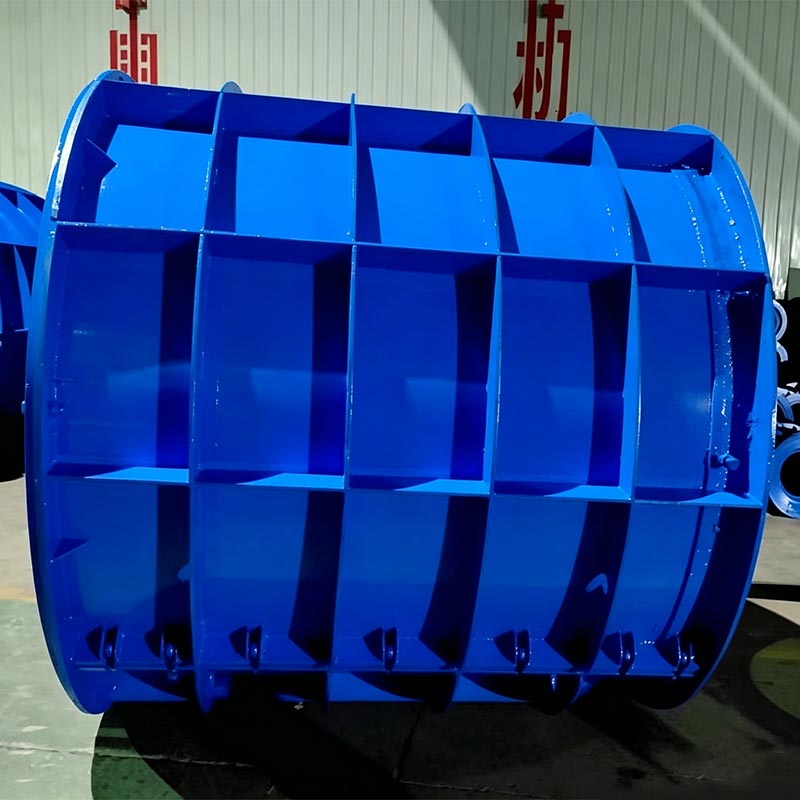
1. Joint sealing land: the first check
In a concrete pipe mould project, for joint ring datum inspection, compare joint sealing land with ring seating face and axial runout under the same identified configuration. Measure the spigot and socket from one agreed datum, rather than accumulating unrelated measurements.
For buyers reviewing a concrete pipe mould, avoid mixing ring sets merely because their nominal diameters match. Compatible locating diameters, seating faces, axial references, and joint revisions must also agree. Label matched and interchangeable sets according to the approved design. A documented interchange trial provides stronger evidence than the fact that two loose components can be pushed together.
For a concrete pipe mould, cleaning must preserve the working profile. Remove residues with tools and methods appropriate to the surface, especially around sealing lands and ring seats. Inspect scratches, dents, and local metal loss before approving the next run. Aggressive cleaning that changes a precision feature creates a dimensional problem while solving a housekeeping problem.
2. Ring seating face: the connected interface
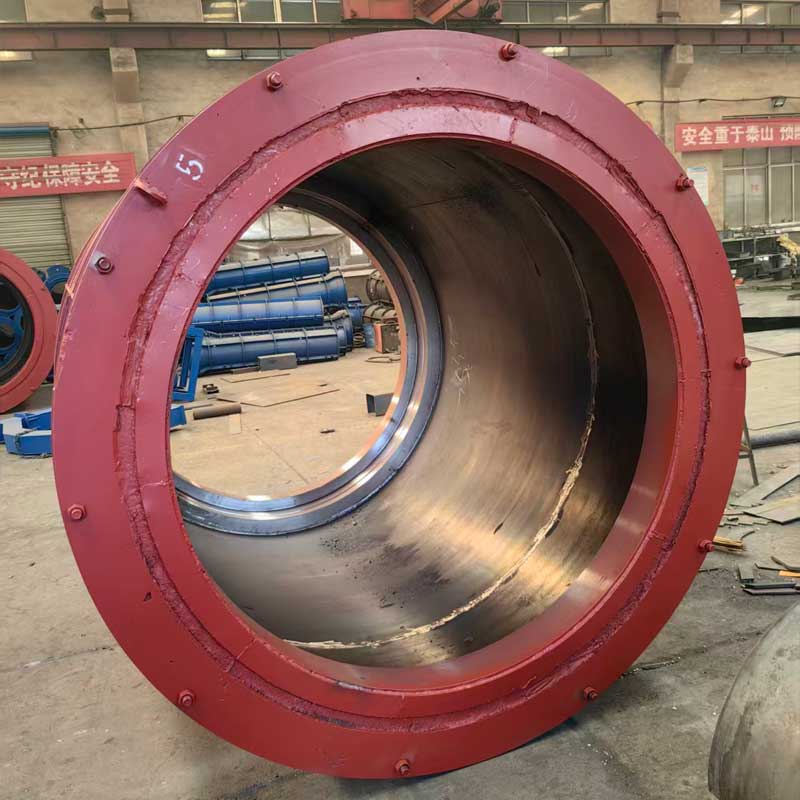
When assessing a concrete pipe mould, the end ring creates a functional interface with the next pipe. Its seating face, locating feature, and forming profile work together. If the locating face is worn, installing a new ring may change the apparent fit without restoring the intended geometry. Inspect the seat as well as the removable component.
In projects involving a concrete pipe mould, mating joint verification benefits from an agreed reference sample or controlled counterpart. An unidentified old pipe may itself be worn or damaged. Record the identity and condition of anything used to judge fit. Where gasket behaviour matters, use the approved gasket profile and assembly conditions rather than an improvised substitute.
3. Axial runout: the acceptance condition
For buyers reviewing a concrete pipe mould, define the pipe axis before inspecting a joint. A diameter taken at one end does not establish coaxiality over the barrel. Use an agreed measurement arrangement and record the locations, orientation, and support condition. When comparing results, keep the same reference rather than moving the datum to whichever surface is easiest to reach.
In a concrete pipe mould project, for repeated small orders, retain the last accepted configuration with a list of parts that must be rechecked. Storage, transport, and maintenance can change that condition. The previous result is a starting reference, not permission to skip the first-product inspection. Keep the new result attached to the current order and setup identity.
4. Concrete pipe mould review options
When assessing a concrete pipe mould, the decision table connects joint ring datum inspection with the evidence needed for joint sealing land, ring seating face, and axial runout.
| Decision point | Evidence to request | What it resolves |
|---|---|---|
| Joint sealing land | Defined reference and initial observations | Measure the spigot and socket from one agreed datum, rather than accumulating unrelated measurements. |
| Ring seating face | Installed configuration and connected interfaces | Whether the result changes with setup or handling |
| Axial runout | Representative trial and released-product inspection | Whether the agreed acceptance question has been answered |
| Return to routine production | Verified configuration, open actions, and recheck triggers | How the accepted result will be reproduced |
5. Production interfaces for concrete pipe mould
In projects involving a concrete pipe mould, factory acceptance should connect the empty tool inspection with a representative casting trial. Agree on material supply, machine availability, measurement method, and treatment of rejected trial pieces. A successful closure demonstration alone does not prove finished-pipe conformity, and a good trial pipe does not replace the dimensional records needed for repeat production.
For buyers reviewing a concrete pipe mould, track production interruptions by cause rather than recording only lost minutes. Separate ring changes, cleaning, alignment corrections, and repairs. These records help determine whether another complete mould set or a focused spare-part kit would address the recurring constraint. Capacity planning improves when it uses the actual reasons tooling becomes unavailable.
6. A representative verification trial
In a concrete pipe mould project, for joint ring datum inspection, record the incoming or assembled condition, the verified setup or intervention, and the final observation. Identify joint sealing land, ring seating face, and axial runout on the trial sheet. Keep failures and interruptions in the record. If an input, support, or measurement method changes, label the change so the next comparison remains interpretable.
When assessing a concrete pipe mould, the inspection instrument must reach the defined surface without forcing or tilting it. Large joint features may require dedicated gauges or a planned measurement arrangement. Ask how the gauge references the pipe axis and how repeatability will be checked. A precise instrument used in an unstable position can still produce unreliable results.
Joint names do not replace a drawing. A socket-and-spigot arrangement may include different gasket profiles and insertion requirements. A tongue-and-groove connection also needs a defined mating geometry. Agree on the complete joint detail, drawing revision, and inspection responsibility before the supplier manufactures the corresponding tooling.
7. Maintenance and repeatability of concrete pipe mould
Maintenance records become more useful when measurements repeat at fixed positions. Record the tool identity, ring revision, gauge, operator, and support arrangement. A gradual dimensional change can then be separated from a one-time setup difference. Replace or restore components using the approved interface rather than matching an already worn sample.
Wall thickness depends on the relationship between the core and the outer shell. A correct outer diameter does not prove that the core remained centred. Map thickness at several circumferential and axial positions on trial products, then compare the pattern with support and centring features before changing unrelated process settings.
8. Evidence to include in the technical inquiry
The inquiry for joint ring datum inspection should include the approved pipe and joint drawing, the planned material or product range, and observations of joint sealing land, ring seating face, and axial runout. Ask the supplier to identify its proposed configuration, excluded conditions, trial method, and supply boundary. A quotation is easier to compare when it answers these project-specific interfaces.
Explore Huier’s related product information and submit drawings through the technical inquiry page. Keep any proposed change to the requirement separate from a change to the equipment or tooling. Record which party must approve each change before it enters production.
9. Decision checklist for concrete pipe mould
Before releasing this project stage, confirm the approved revision, the evidence for joint sealing land, the connected check for ring seating face, and the acceptance observation for axial runout. Identify any product or condition that the trial did not cover. Keep the accepted configuration and the triggers for reinspection together with the order record.
Additional reading: precast concrete background. This reference is provided as technical background, without implying a product certification or an independent assessment of the proposed equipment.
For a concrete pipe mould project involving joint ring datum inspection, send Shandong Huier Heavy Industry the approved drawing, representative input details, and observations for joint sealing land, ring seating face, and axial runout. Request a configuration review and a clearly defined quotation, trial, and inspection scope.
Frequently asked questions
What is the first priority in joint ring datum inspection?
Measure the spigot and socket from one agreed datum, rather than accumulating unrelated measurements. Use the approved pipe and joint drawing to define the acceptance question before changing the setup or ordering parts.
How should joint sealing land be recorded for concrete pipe mould?
Record the identified configuration and inspection reference. Compare joint sealing land with the agreed requirement and retain the connected observation for ring seating face.
Why does ring seating face matter when reviewing a concrete pipe mould?
It is one of the interfaces identified for joint ring datum inspection. Check ring seating face against the project requirement, alongside the evidence for joint sealing land and axial runout, before assigning a cause.
What trial evidence is needed for concrete pipe mould?
Represent the actual input and configuration for joint ring datum inspection. Retain results for joint sealing land, ring seating face, and axial runout, including failed checks.
What should a supplier proposal for concrete pipe mould contain?
It should address joint ring datum inspection, the defined supply boundary, and the method for verifying joint sealing land. Include the approved pipe and joint drawing in the inquiry.