Table of Contents
Concrete pipe mould: Check whether the core stays concentric after the reinforcement cage and concrete have been loaded. For wall thickness consistency, the review should connect core centering, radial clearance, and wall thickness map. The purpose is to establish what must be checked before the next production or purchasing decision, using the approved pipe and joint drawing as the controlling reference.
When assessing a concrete pipe mould, use the approved pipe and joint drawing for the project-specific limits and inspection method. The following checks connect core centering with radial clearance and wall thickness map.

1. Core centering: the first check
In a concrete pipe mould project, for wall thickness consistency, compare core centering with radial clearance and wall thickness map under the same identified configuration. Check whether the core stays concentric after the reinforcement cage and concrete have been loaded.
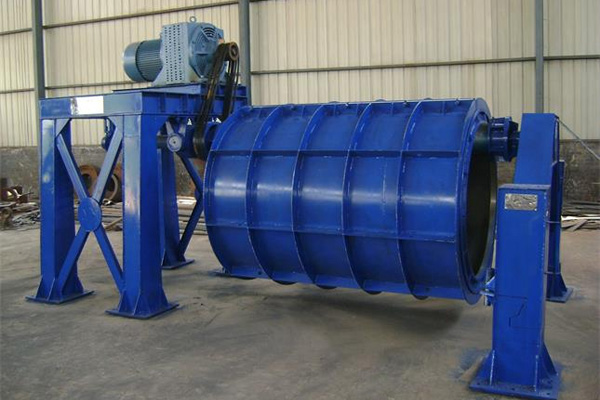
For buyers reviewing a concrete pipe mould, wall thickness depends on the relationship between the core and the outer shell. A correct outer diameter does not prove that the core remained centred. Map thickness at several circumferential and axial positions on trial products, then compare the pattern with support and centring features before changing unrelated process settings.
For a concrete pipe mould, the end ring creates a functional interface with the next pipe. Its seating face, locating feature, and forming profile work together. If the locating face is worn, installing a new ring may change the apparent fit without restoring the intended geometry. Inspect the seat as well as the removable component.
2. Radial clearance: the connected interface
When assessing a concrete pipe mould, concentricity checks should include both ends of the assembled form. A core can be correctly positioned near one ring and displaced near the other. Mark measurement stations on the setup drawing and retain their identity in trial records. Compare the pattern with the finished-pipe thickness map before deciding which locating feature needs attention.
In projects involving a concrete pipe mould, joint names do not replace a drawing. A socket-and-spigot arrangement may include different gasket profiles and insertion requirements. A tongue-and-groove connection also needs a defined mating geometry. Agree on the complete joint detail, drawing revision, and inspection responsibility before the supplier manufactures the corresponding tooling.
3. Wall thickness map: the acceptance condition
For buyers reviewing a concrete pipe mould, a changeover kit should identify every compatible ring, spacer, core part, and setting. Mark components so an operator can distinguish similar sizes without guessing. After assembly, verify the first accepted product against the approved drawing. A completed changeover checklist is useful only when it corresponds to the parts actually installed.
For a concrete pipe mould, maintenance records become more useful when measurements repeat at fixed positions. Record the tool identity, ring revision, gauge, operator, and support arrangement. A gradual dimensional change can then be separated from a one-time setup difference. Replace or restore components using the approved interface rather than matching an already worn sample.
4. Concrete pipe mould review options
When assessing a concrete pipe mould, the decision table connects wall thickness consistency with the evidence needed for core centering, radial clearance, and wall thickness map.
| Decision point | Evidence to request | What it resolves |
|---|---|---|
| Core centering | Defined reference and initial observations | Check whether the core stays concentric after the reinforcement cage and concrete have been loaded. |
| Radial clearance | Installed configuration and connected interfaces | Whether the result changes with setup or handling |
| Wall thickness map | Representative trial and released-product inspection | Whether the agreed acceptance question has been answered |
| Return to routine production | Verified configuration, open actions, and recheck triggers | How the accepted result will be reproduced |

5. Production interfaces for concrete pipe mould
In projects involving a concrete pipe mould, the reinforcement cage must fit the actual casting envelope. Check its diameter, local distortion, spacer arrangement, and end position before closing the mould. A cage that rubs against the forming surface can move during filling or interfere with release. Tooling adjustments should not be used to conceal a reinforcement positioning problem.
For buyers reviewing a concrete pipe mould, effective laying length and overall length are different references. A projecting joint can increase the overall measurement without changing the installed advance of a pipe. The purchase specification should state which length controls production acceptance and identify where the inspector places the measuring instrument.
6. A representative verification trial
In a concrete pipe mould project, for wall thickness consistency, record the incoming or assembled condition, the verified setup or intervention, and the final observation. Identify core centering, radial clearance, and wall thickness map on the trial sheet. Keep failures and interruptions in the record. If an input, support, or measurement method changes, label the change so the next comparison remains interpretable.
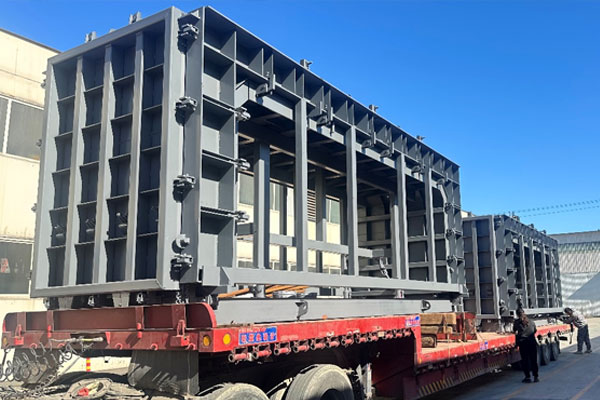
When assessing a concrete pipe mould, a split shell needs clean, consistent closure. Hardened paste on a flange can hold the shell open locally, while an uneven clamp sequence can produce a different gap elsewhere. Close the empty form using the documented procedure, inspect the split, and repeat the check under representative operating conditions where the design permits.
For repeated small orders, retain the last accepted configuration with a list of parts that must be rechecked. Storage, transport, and maintenance can change that condition. The previous result is a starting reference, not permission to skip the first-product inspection. Keep the new result attached to the current order and setup identity.
7. Maintenance and repeatability of concrete pipe mould
Flange flatness and clamp engagement should be evaluated separately. A clamp can close fully while a damaged face leaves a local gap. Mark the gap location and compare it after cleaning and reassembly. If the gap persists, have the supplier review the interface instead of treating additional closing force as proof of correction.
Demoulding timing should follow the approved concrete production method. Record the release condition and look for trapped profiles, uneven movement, or contact marks. Edge damage can have more than one cause. Increasing force without understanding the restraint may damage a sound mould or a casting that has not reached the required release condition.
8. Evidence to include in the technical inquiry
The inquiry for wall thickness consistency should include the approved pipe and joint drawing, the planned material or product range, and observations of core centering, radial clearance, and wall thickness map. Ask the supplier to identify its proposed configuration, excluded conditions, trial method, and supply boundary. A quotation is easier to compare when it answers these project-specific interfaces.
Explore Huier’s related product information and submit drawings through the technical inquiry page. Keep any proposed change to the requirement separate from a change to the equipment or tooling. Record which party must approve each change before it enters production.
9. Decision checklist for concrete pipe mould
Before releasing this project stage, confirm the approved revision, the evidence for core centering, the connected check for radial clearance, and the acceptance observation for wall thickness map. Identify any product or condition that the trial did not cover. Keep the accepted configuration and the triggers for reinspection together with the order record.
Additional reading: precast concrete background. This reference is provided as technical background, without implying a product certification or an independent assessment of the proposed equipment.
For a concrete pipe mould project involving wall thickness consistency, send Shandong Huier Heavy Industry the approved drawing, representative input details, and observations for core centering, radial clearance, and wall thickness map. Request a configuration review and a clearly defined quotation, trial, and inspection scope.
Frequently asked questions
What is the first priority in wall thickness consistency?
Check whether the core stays concentric after the reinforcement cage and concrete have been loaded. Use the approved pipe and joint drawing to define the acceptance question before changing the setup or ordering parts.
How should core centering be recorded for concrete pipe mould?
Record the identified configuration and inspection reference. Compare core centering with the agreed requirement and retain the connected observation for radial clearance.
Why does radial clearance matter when reviewing a concrete pipe mould?
It is one of the interfaces identified for wall thickness consistency. Check radial clearance against the project requirement, alongside the evidence for core centering and wall thickness map, before assigning a cause.
What trial evidence is needed for concrete pipe mould?
Represent the actual input and configuration for wall thickness consistency. Retain results for core centering, radial clearance, and wall thickness map, including failed checks.
What should a supplier proposal for concrete pipe mould contain?
It should address wall thickness consistency, the defined supply boundary, and the method for verifying core centering. Include the approved pipe and joint drawing in the inquiry.